
Vegetarian meals fail most often for a reason nobody wants to admit: in a 2026 Dutch survey from Current Developments in Nutrition, only 3% of all meals hit the mark for enough protein, mostly plant protein, and optimal protein quality.
That’s the gap between a plate that looks wholesome and a dinner that keeps you out of the snack drawer at 9:30. Meatless doesn’t automatically mean complete. Sometimes it means toast with cheese and no vegetables.
The best vegetarian dinners solve a practical problem first. They give you protein, texture, speed. A reason to make them again next week.
That can be pasta with lentils, beans over rice, paneer, tofu, pizza, or a loaded sandwich. In my honest opinion, repeatability matters more than culinary ambition here. This guide looks at the dinners people actually cook, order, and return to when hunger is not in the mood for theory.
What makes a vegetarian dinner feel complete?
The most satisfying meatless dinners usually fail when they try to act like steak with side dishes. That sounds backwards, but it’s the key.
A good vegetarian plate doesn’t need a “main” that copies meat. It needs chew, creaminess, crisp edges, and enough protein to keep you from hunting for snacks an hour later.
A better starting point is the anchor. Lentils, chickpeas, tofu, eggs, Greek yogurt, and paneer all do that job well.
They give the meal weight. They also change how it eats: lentils feel hearty, eggs feel rich, yogurt cools and sharpens, and paneer brings that firm, salty bite people miss when dinner is all vegetables.
A 2026 analysis in Current Developments in Nutrition found that only 3% of meals in a large Dutch dietary survey hit three marks at once: at least 20 grams of protein, 60% or more plant-based protein, and strong meal protein quality. That doesn’t mean dinner needs math.
It means “meatless” alone isn’t the goal. Structure matters.
Here’s the simple plate formula that works: vegetables for volume and bite, starch for comfort, fat for satisfaction. A protein anchor to hold it together. Think roasted broccoli with potatoes and olive oil, then add chickpeas, eggs, paneer, or yogurt sauce so it doesn’t eat like a side dish pretending to be dinner.
Beans usually win for lasting fullness because they bring protein and fiber together. Grains help, but rice or pasta alone can fade fast unless something richer joins the plate.
Cheese-based meals feel satisfying quickly. They can turn heavy without vegetables or starch to balance them.
In my view, the best Vegetarian meals don’t replace meat piece by piece. They build a different kind of fullness, where texture does as much work as protein. Crunchy, creamy, tender, and chewy beats a lonely slab of fake chicken almost every time.
10 dinner foods vegetarians actually make again and again
In Denmark, pasta made up just 8% of meat-free evening meals. The real repeat habit was simpler: bread, toast, and anything fast.
In 2025, according to Madkulturen/Madkultur25, half of meat-free dinners were made in under 15 minutes. That says a lot about what people actually cook after work.
The obvious pick is pasta. The better weeknight answer is usually the meal you can change with whatever is already in your kitchen. In my honest opinion, that’s why the smartest dinner list starts with formats, not perfect recipes.
- Lentil bolognese: Rich enough for spaghetti night, easy to freeze, and better the next day.
- Chickpea curry: A pantry dinner that works with coconut milk, tomato sauce, or a quick spice paste.
- Veggie stir-fry with tofu: Fast, clean-out-the-fridge cooking. Change the sauce and it feels new.
- Black bean tacos: Cheap, filling, and easy to scale for one person or a table of four.
- Mushroom risotto: Creamy without feeling heavy. The tradeoff is attention. You can’t totally walk away.
- Vegetable lasagna: A weekend bake that becomes two or three low-effort dinners later.
- Falafel bowls: Crunch, sauce, grain, salad, pickles. It’s dinner by assembly, not stress.
- Shakshuka: Tomato-pepper sauce turns a single pan into something warm, bold, and spoonable.
- Paneer tikka: Big flavor, quick cooking, and satisfying even when the rest of the plate stays simple.
- Stuffed peppers: A flexible base for rice, beans, herbs, cheese, or leftovers that need a job.
Pasta, curry, tacos, and rice bowls stay in heavy rotation for a boring reason: they’re flexible and low-cost. You can swap the vegetable, change the sauce, use yesterday’s grain, or stretch one can of beans across dinner. That matters more than novelty.
There’s a catch, though. Easy meat-free dinners can lean too hard on starch and cheese if you let them.
The fix isn’t making dinner complicated. It’s choosing dishes that leave room for vegetables, sauce, texture, and something with real staying power.
Which vegetarian dinner is the best choice for you?
The dinner you’ll actually repeat is usually the one that matches your energy at 6:17 p.m., not the one that looks virtuous on Sunday.
If speed is the main issue, pick meals that start with cooked starch and end in one pan. Egg fried rice works when you have leftover rice and a bag of frozen peas.
Quesadillas need tortillas, cheese, and whatever vegetables are close to going soft. Sheet-pan gnocchi is even lazier: dump, season, roast, eat.
Budget changes the answer fast. Beans, lentils, rice, and potatoes win because they stretch without feeling like punishment. A pot of lentils can become soup one night and spooned-over rice the next.
Potatoes can carry beans, cheese, yogurt, salsa, or sautéed greens. Cheap food doesn’t have to feel small.
A useful clue comes from the Tesco 2025/26 Sustainability Report, which says 40% of customers are trying to eat more legumes, beans, and grains. That matters at home because those foods are not niche anymore. They’re the backbone of low-stress dinners for people who want fullness without buying specialty ingredients.
Cold nights ask for a different kind of answer. Mac and cheese, baked lasagna. A thick curry bring weight, warmth, and leftovers.
They’re not always the lightest options, but that’s not the point. Sometimes the best dinner is the one that stops you from snacking for two hours after eating.
That’s the tension people get wrong. The “best” choice isn’t always the one with the longest vegetable list or the cleanest nutrition label. In my humble opinion, the real winner is the meal you’ll cook on a Tuesday without negotiating with yourself first.
So match the meal to the night. If you’re tired, make fried rice or quesadillas.
If money is tight, build around beans, rice, lentils, or potatoes. If you want comfort, lean into pasta bakes, curry, or cheese-heavy dishes and serve something green on the side if you feel like it.
The vegetarian dish people order and cook most often
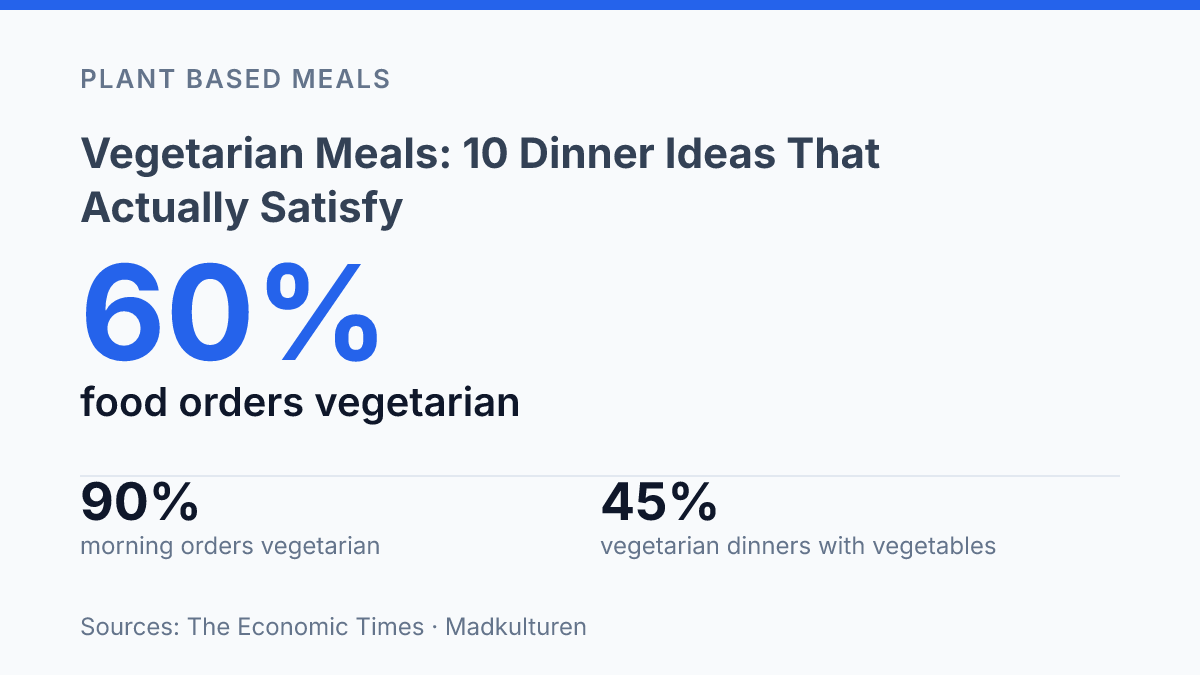
In India, one delivery platform reported that 60% of its food orders were vegetarian in 2024, according to The Economic Times reporting data from Swiggy. That number doesn’t crown one dinner as the world champion. It does show something more useful: the dishes people repeat are usually the ones they already understand.
That doesn’t mean the most popular option is always the most exciting one. Pizza, pasta, curry, and chili win so often because they ask very little from the cook. You can change the cheese, beans, vegetables, sauce, spice level, or grain and still end up with dinner.
Pizza may be the easiest crowd answer. A Margherita works for picky eaters, a mushroom pie feels richer. A vegetable-loaded version can clear out the fridge.
Pasta has the same advantage. Tomato sauce, pesto, cream sauce, roasted vegetables, lentils, or cheese can all make it feel familiar without tasting identical every time.
Curry has a different kind of reach. It absorbs local habits fast, from chickpea versions to paneer dishes to coconut-based vegetable stews.
Chili does the same with beans, tomatoes, corn, peppers, and toppings. Neither dish needs meat to feel like a full meal, but both can taste flat if the seasoning is timid.
Regional favorites prove the point without turning dinner into a geography lesson. Palak paneer is a go-to in India because it gives you creamy greens, spice, and protein in one bowl.
Falafel carries the same broad appeal across the Middle East, especially when paired with bread, pickles, salad, and sauce. In Italy, caprese-style dishes lean on tomatoes, mozzarella, basil, and olive oil for a simpler kind of satisfaction.
In my view, the real winner isn’t the fanciest dish. It’s the one that travels well across cultures and still tastes good the next day.
That’s why pizza, pasta, curry, and chili keep showing up. They’re familiar enough to trust, flexible enough to personalize, and forgiving enough to survive leftovers.
The dinner test that matters on a tired Tuesday
Labels won’t decide what lands on your plate next month. Habits will.
The useful signal from International Food Information Council in 2025 is not that strict vegetarian eating dominates the U.S. It doesn’t. The sharper number is 5% following a flexitarian pattern, a group big enough to reshape what “normal dinner” looks like without making a public declaration.
So make the next step small. Choose one dinner format you already trust. Add a protein anchor.
Add vegetables on purpose. Keep the sauce you like.
In my humble opinion, the winning meat-free dinner is not the most virtuous one. It’s the one you can make when you’re hungry, tired, and still want the meal to feel like a real reward.
Frequently Asked Questions
Q: What are 10 good dinner foods for vegetarians?
A: The best picks are the ones that bring protein, fat, and texture to the plate. Think lentil curry, bean chili, tofu stir-fry, veggie fajitas, pasta with white beans, stuffed peppers, mushroom risotto, chickpea bowls, paneer skillet meals, and hearty grain salads. In my view, if a vegetarian dinner doesn’t keep you full for hours, it’s not doing its job.
Q: What makes a vegetarian dinner actually satisfying?
A: Protein matters, but so does volume. You want beans, tofu, tempeh, eggs, cheese, or Greek yogurt, plus vegetables and a carb that holds the meal together. The surprise is that a plain salad usually fails here. A warm grain bowl or saucy skillet meal works much better.
Q: What is the best dinner for vegetarians?
A: There isn’t one single winner. The strongest answer is a meal that feels complete. A lentil bolognese with pasta, or a loaded burrito bowl with rice, beans, avocado, and salsa, hits that sweet spot. It’s filling, fast, and easy to repeat on busy weeknights.
Q: What’s the most popular vegetarian dish?
A: Paneer dishes and veggie curries rank near the top in many home kitchens, especially when people want something rich and comforting. In Western search habits, pasta dishes and chili-style meals show up a lot too. The pattern is clear: people want comfort first, not just a pile of vegetables.
Q: How do I make vegetarian meals more filling without meat?
A: Start with protein, then add fiber and fat. Beans, lentils, eggs, tofu, nuts, seeds, and cheese all help, but portion size matters too… a tiny bowl of rice and vegetables won’t carry you far. In my honest opinion, the simplest fix is to build around one anchor ingredient, not five side dishes.